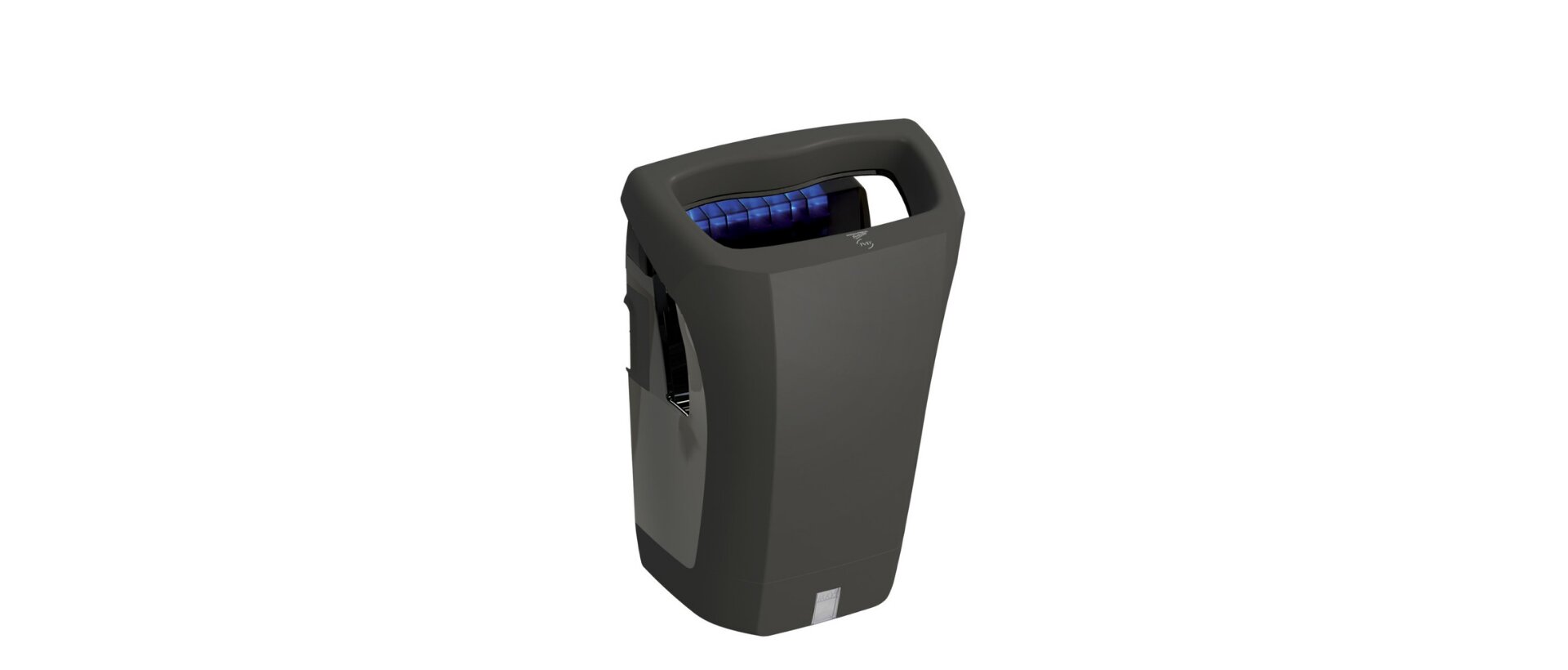
The guide to finding the right professional hand dryer
Choosing a professional hand dryer depends first and foremost on your environment and how it will be used. In a hotel, restaurant, office, school, nursery, public facility, train station, airport or high-traffic location, the requirements are not the same in terms of drying speed, noise level, durability, accessibility and energy consumption. To make the right choice, it is essential to compare the available technologies: warm air hand dryers, cold air hand dryers, high-speed hand dryers, quiet hand dryers and solutions designed for demanding washrooms.
This guide helps you identify the electric hand dryer best suited to your business, based on the criteria that really matter: warm air or cold air, budget, maintenance, user comfort, traffic level, robustness and energy savings. Whether you are looking for an economical hand dryer, an accessible hand dryer, a model for public washrooms, an odour-control solution or a hand dryer made in France, you can compare the options more easily, understand the differences between technologies and choose a durable, coherent and high-performance solution.
The 6 questions to ask before choosing an electric hand dryer
01. Which professional hand dryer should you choose for your establishment?
A hand dryer is never used in a neutral environment. In a slightly cool changing room, an exposed washroom or a poorly heated area, the user’s feeling matters just as much as pure performance. A product that looks efficient on paper can quickly feel uncomfortable if the air seems too cold or if the drying experience lacks comfort. In these situations, a warm air model such as the heated Copt’Air S naturally finds its place: it is better suited to spaces where thermal comfort contributes to the quality of the welcome.
02. Which hand dryer should you choose for a high-traffic washroom?
In a high-traffic washroom, the best hand dryer is the one users barely notice: it dries quickly, remains available and prevents waiting times from building up. Users come and go continuously, they do not linger, and the equipment must keep up without becoming a point of friction. For this type of use, a model such as Sup’Air is well suited: it is designed for locations looking for an efficient, compact solution capable of handling a regular flow of users throughout the day.

03. Which quiet hand dryer should you choose for a noise-sensitive environment?
The noise of a hand dryer does not have the same impact whether it is installed in a train station, restaurant, office or nursery. In quiet environments, it quickly becomes a real comfort factor. A product that is too loud can disturb the atmosphere, interrupt conversations or give a less refined impression of the washroom. In more sensitive settings, Stell’Air helps guide the choice towards a softer experience, designed for spaces where acoustic comfort is part of perceived quality.
04. Which quiet hand dryer should you choose for a noise-sensitive environment?
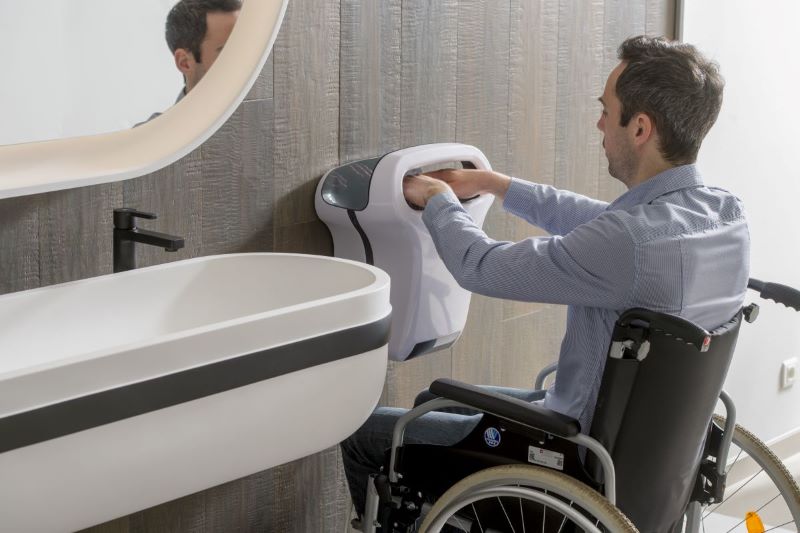
A good hand dryer should be easy to understand and use, without any particular effort. In public buildings, schools, nurseries or accessible washrooms, the question is not only about performance: it also involves gesture, height, approach and ease of use for every user. This is where a model such as Exp’Air can be highlighted, especially when looking for a solution suited to varied users, from children to people with reduced mobility.
05. Which robust hand dryer should you choose for a public facility or high-use location?
In some washrooms, equipment is constantly put to the test. Repeated use, sometimes abrupt gestures, frequent cleaning and more exposed environments require a hand dryer that can last without becoming a source of maintenance. The right choice must inspire confidence from the moment it is installed. For public facilities, transport hubs, workshops or heavily used locations, Copt’Air fits well into this logic of robustness, with a more technical and reassuring presence.
06. Which economical hand dryer should you choose to reduce operating costs?
The purchase price is only part of the story. Over time, energy consumption, maintenance, avoided consumables, reduced waste and time saved by teams are what really make the difference. A well-chosen hand dryer should therefore be seen as a long-term usage investment, not just as washroom equipment. In this approach, Sup’Air is a strong reference point for establishments that want to control daily costs, while Sup’Air Fresh provides a more complete response when odours also become part of the user experience.

The JVD electric hand dryer range
High-speed air dryers
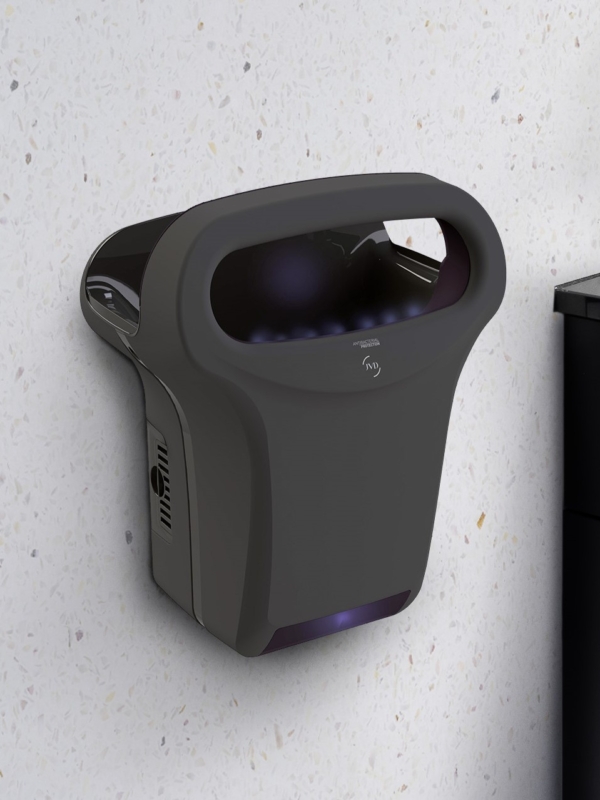
The Exp’air, Stell’air, Copt’air and Sup’air models feature a slim air outlet that follows the contours of the skin to efficiently remove water.
Warm air dryers
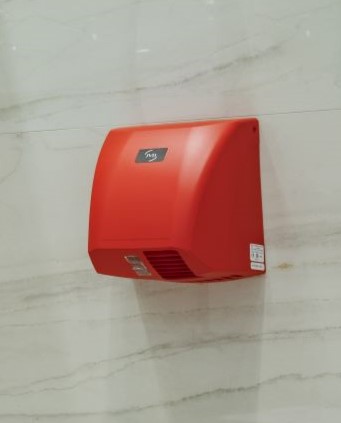
The Zephyr, Tornade, Ouragan and Master dryers are compact and energy efficient, delivering warmth and reliability.
Odour neutraliser
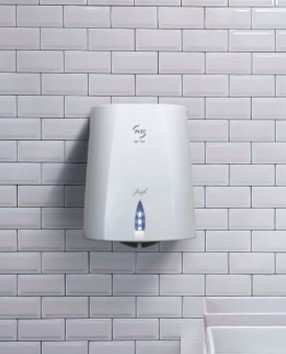
More than just drying hands, the Sup’air Fresh eliminates unpleasant odours with patented deodorising technology.
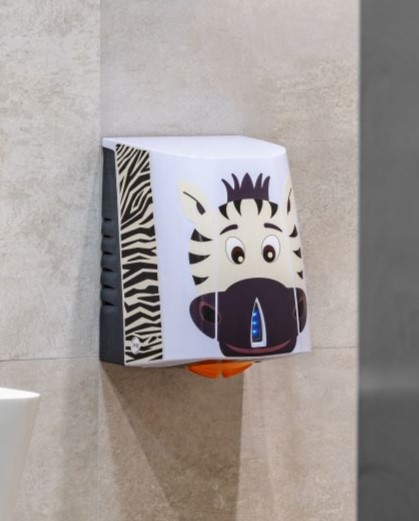
Kids version
Fun and customisable options to make handwashing easy and engaging for children..
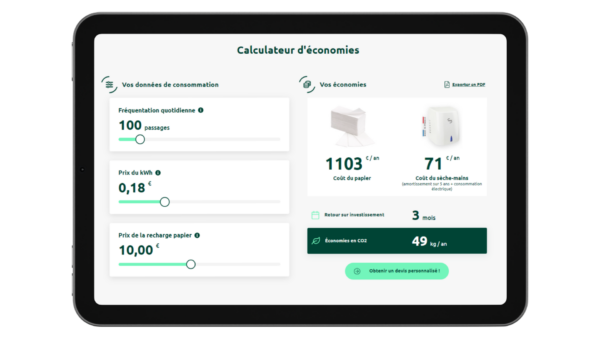
Calculate your savings with an economical JVD hand dryer
Up to 10x cheaper than paper!
The right choice is not just about the purchase price. Energy consumption, traffic level, paper refills, maintenance and waste: the real cost of an electric hand dryer is measured over time. With the JVD calculator, estimate in just a few seconds how much you can save by switching to an economical, high-performance hand dryer adapted to your establishment.
Oui, dans de nombreux cas, le sèche-mains professionnel permet de réduire le coût d’exploitation par rapport aux essuie-mains papier. L’analyse ne doit pas se limiter au prix d’achat : il faut aussi prendre en compte les consommables, le réassort, la maintenance, la gestion des déchets et le temps mobilisé par les équipes. Sur le long terme, une solution bien dimensionnée peut s’avérer nettement plus rentable.
Dans un environnement à forte fréquentation, le temps de séchage devient un critère clé. Plus il est court, plus le passage est fluide et moins le risque d’attente est élevé. Un modèle trop lent peut dégrader l’expérience utilisateur et créer des points de congestion dans les sanitaires. Le bon objectif dépend donc du niveau de fréquentation réel et du confort attendu.
Oui, mais tous les modèles ne proposent pas le même équilibre entre performance et confort acoustique. Dans certains environnements, comme les hôtels, bureaux ou établissements de santé, il est important de rechercher une solution capable d’offrir un séchage efficace sans générer une gêne sonore excessive. Le bon choix consiste à trouver le niveau de performance cohérent avec votre contexte d’usage.
L’accessibilité ne dépend pas uniquement du produit, mais aussi de son installation. Il faut prendre en compte la hauteur de pose, la facilité d’approche, l’espace disponible autour de l’appareil et la simplicité du geste. Pour un projet en ERP ou dans un sanitaire accessible, il est donc essentiel de vérifier à la fois les caractéristiques du modèle et les conditions de mise en œuvre.