After a boxing session, sweat builds up inside the gloves. This warm, poorly ventilated environment encourages unpleasant odors and the growth of micro-organisms. For boxing clubs and gyms that lend gloves to their members, equipment maintenance is a real challenge. It affects hygiene, user comfort and day-to-day organization.
Airing gloves out is a good habit, but it is not always enough when sessions follow one another and equipment is shared. In this article, JVD reviews the causes of bad odors, the drying methods available, and how to combine drying, deodorizing and disinfection in a single cycle with the HYGIgrip professional boxing glove dryer. You will also find out how to choose the right capacity for your boxing gym.
Table of Contents
1. Why do boxing gloves smell bad?
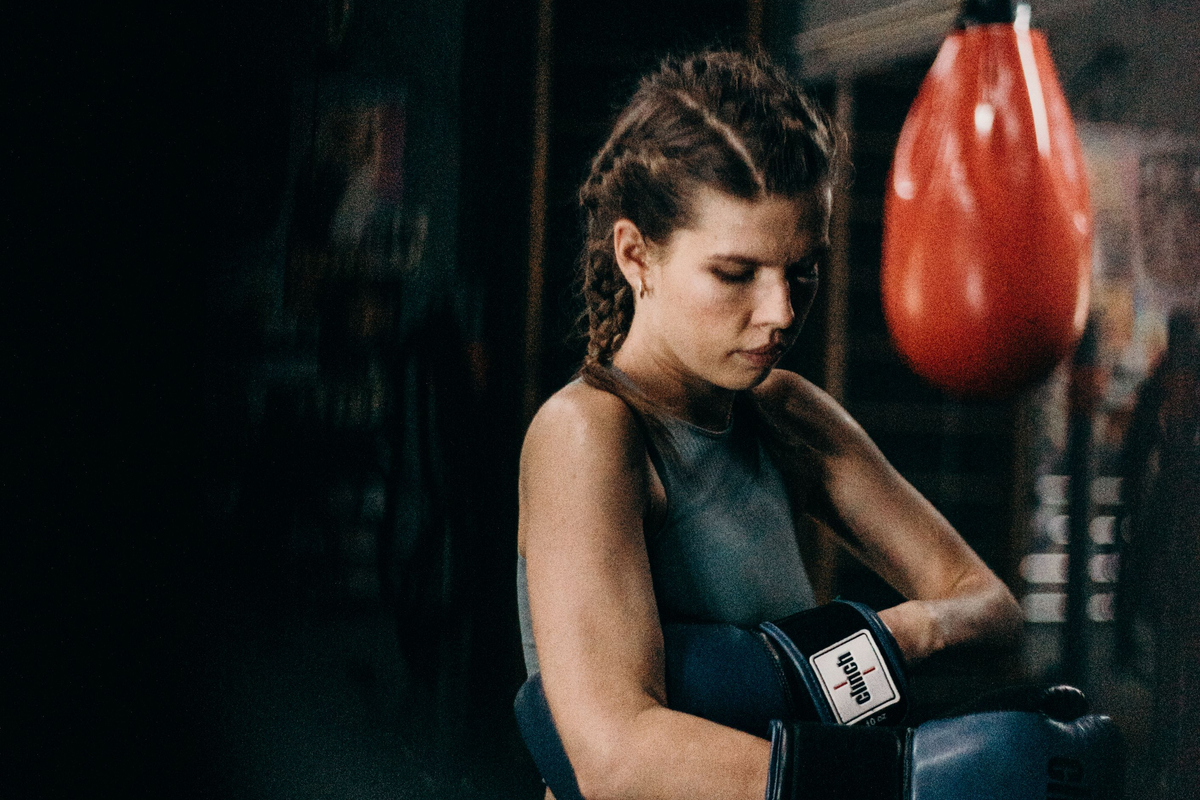
Boxing gloves smell bad because sweat soaks into the inner materials during every training session and stays trapped there. The foam, the reinforcements and hard-to-reach areas retain moisture and slow down drying.
As a result, this moisture encourages the growth of micro-organisms responsible, among other things, for bad odors. When gloves are used successively by several people, as in a boxing club or a gym, maintaining them becomes all the more important.
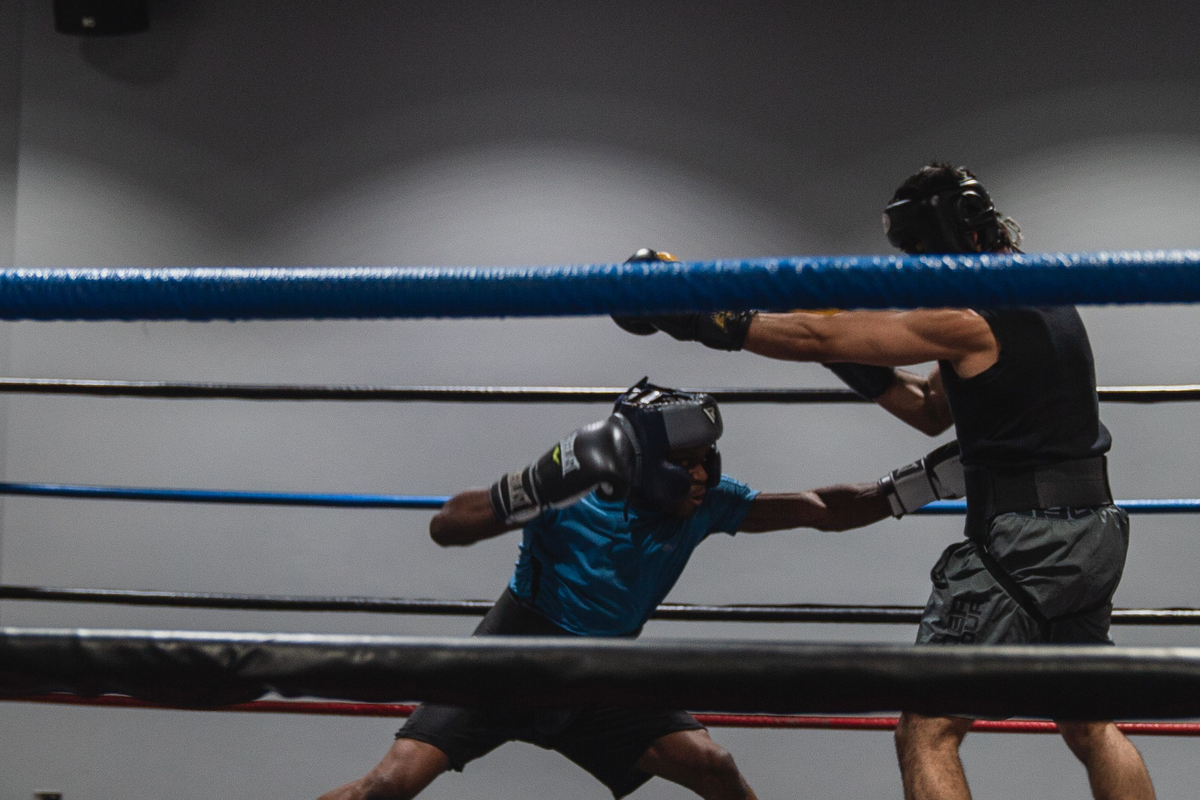
In combat sports, the upkeep of shared equipment is a major hygiene issue. A literature review published in 2026 inQuality in Sport highlights how frequently skin infections feature in the outbreaks recorded among athletes, particularly in contact disciplines.
In France, l’article L322-2 du Code du sport provides that facilities where physical and sports activities take place must offer hygiene and safety guarantees suited to their activity. For clubs that make boxing gloves available to their members, regular maintenance of shared equipment is part of this preventive approach.
Airing gloves after every session is an essential first step. However, drying alone does not replace disinfection. To improve glove maintenance over the long term, it is recommended to combine suitable drying with an appropriate disinfection method.
2. How can you dry boxing gloves effectively?
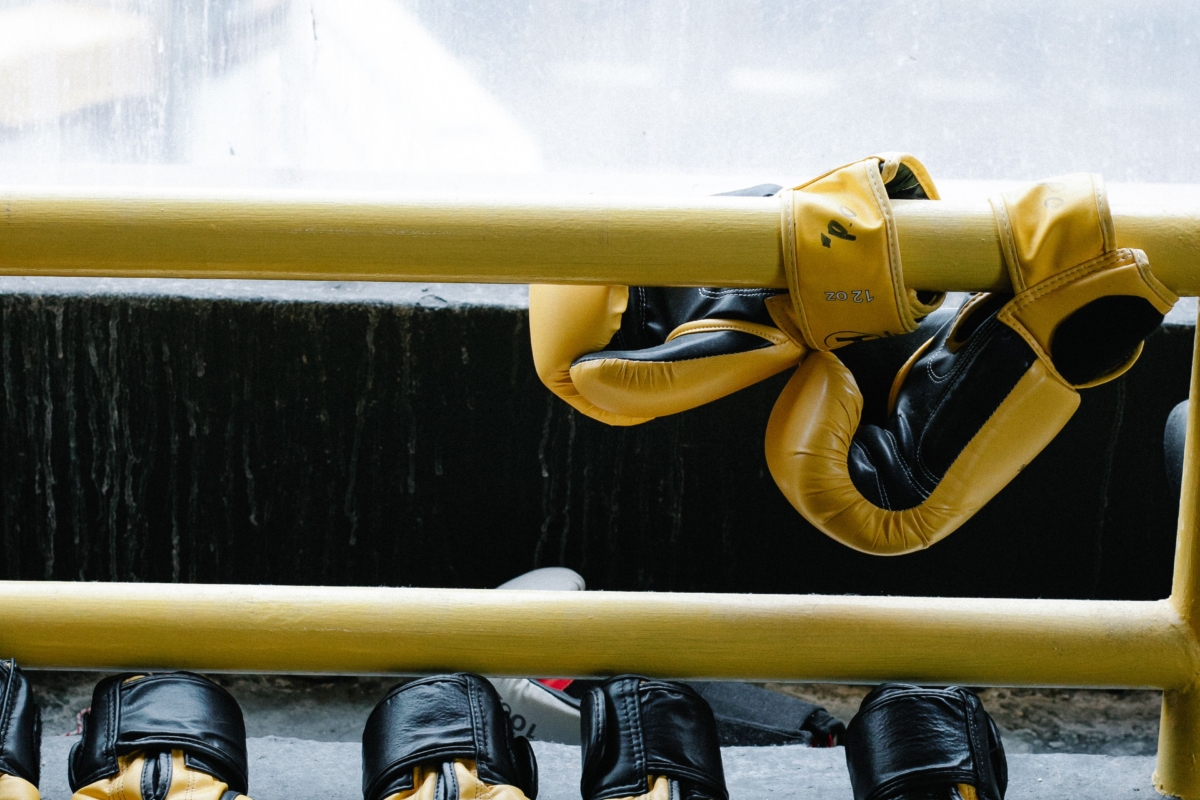
To dry boxing gloves effectively, air must circulate inside them, not just around them. Open-air drying gradually removes moisture. However, this method reaches its limits when sessions follow one another. The padded areas and the thumb compartment, in particular, remain difficult to dry.
Hot-air drying, a method suited to clubs
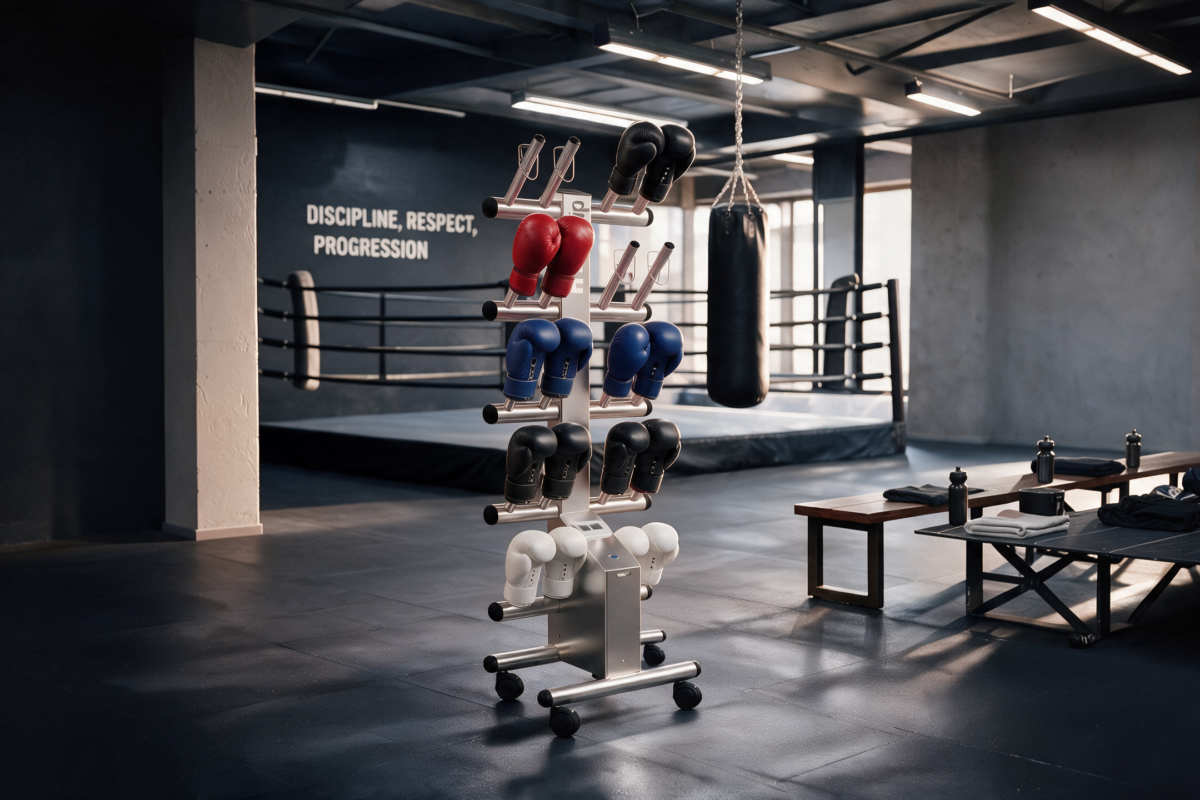
The HYGIgrip glove dryer works by blowing heated air directly inside the gloves through perforated sleeves designed specifically for boxing. As a result, air circulates through the glove to promote even drying of its interior.
In addition, the temperature is controlled (45 °C) to limit exposure to excessive heat, which could damage the materials. Glove drying thus becomes part of the club’s daily routine, without relying solely on natural ventilation.
3. How can you deodorize and disinfect boxing gloves?
To deodorize boxing gloves lastingly, you need to act on the micro-organisms that cause the odors, not just mask them with a perfume or spray.
JVD’s HYGIgrip combines drying with an ozone treatment. A UVC germicidal lamp generates this treatment, while an electronic module regulates it. The device aims to reduce microbial contamination and to treat odors at their source. In addition, it works without any added disinfectant product or synthetic fragrance. As a result, drying and treatment take place within a single cycle.
Disinfection performance assessed in a laboratory
The microbiological performance of the HYGIgrip was assessed by the Laboratoire Vétérinaire Départemental d’Analyses de la Savoie (COFRAC-accredited), and demonstrates a high level of bacteria and mold reduction.
4. Why choose the JVD HYGIgrip boxing glove dryer for a club?
The HYGIgrip is designed for shared environments: it can treat several pairs of gloves in a single unit. It is intended for boxing clubs, gyms, training centers and any facility with shared equipment.
Benefits for a club manager:
- A single cycle to dry and disinfect gloves.
- A treatment with no chemicals or synthetic fragrance.
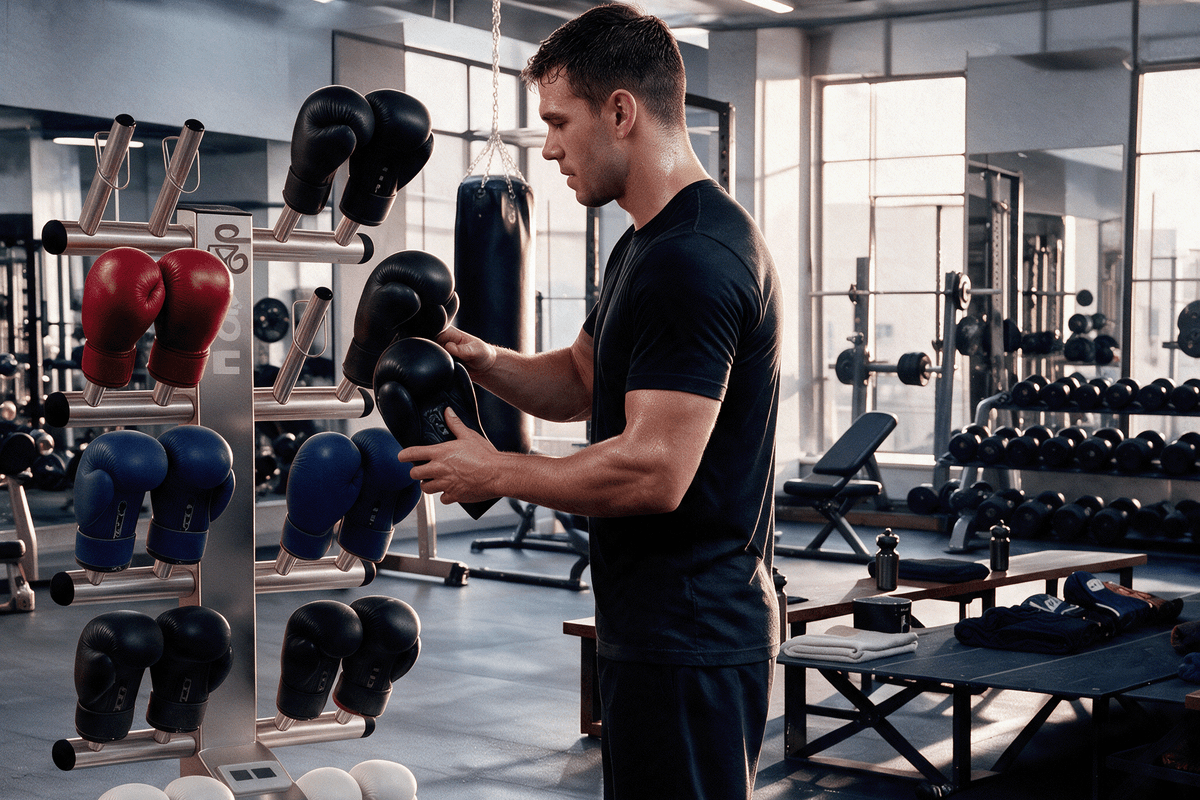
- Simple use: place the gloves on the dedicated sleeves, start the cycle in manual or automatic mode, then let the HYGIgrip handle drying and disinfection.
- Programming in automatic mode: operating days, start times and cycle duration, for example for a treatment before opening.
Also discover JVD’s solutions for sports clubs and EMS studios, studios, suited to professionals’ needs.
5. Air drying or professional boxing glove dryer: what are the differences?
The table below compares open-air drying with JVD’s HYGIgrip glove dryer on the criteria that matter for a club.
| Criteria | Open-air drying | JVD HYGIgrip glove dryer |
| Drying the inside of the glove | Gradual, difficult in padded areas and the thumb | Heated air delivered into the glove via perforated sleeves |
| Temperature | Ambient | Heated air at a controlled 45 °C |
| Bad odors | May persist | Ozone treatment, no synthetic fragrance |
| Disinfection | Not ensured | UVC germicidal lamp and ozone, assessed by a COFRAC-accredited laboratory |
| Club organization | Depends on natural ventilation | Manual or programmable cycle (days, times, duration) |
| Capacity | Depends on available space | 10, 15, 20 or 30 pairs depending on the model |
6. Which boxing glove dryer capacity should you choose for your gym?
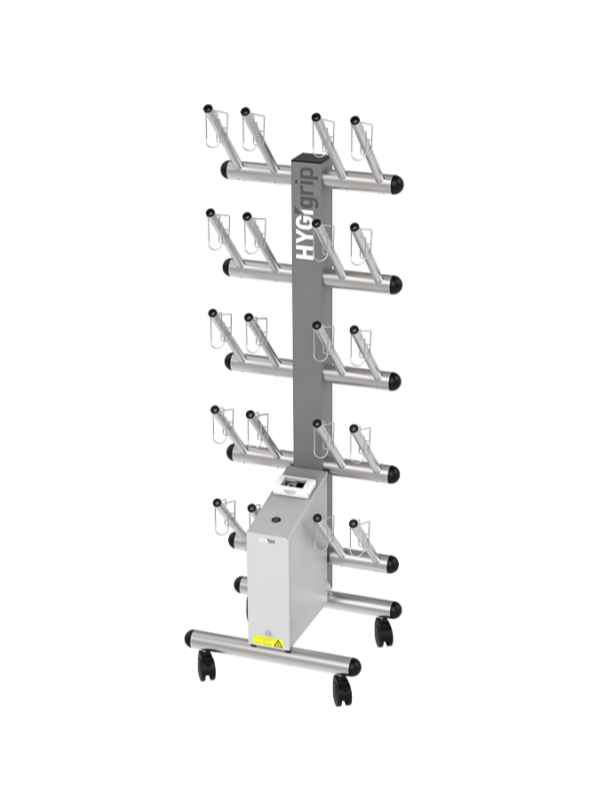
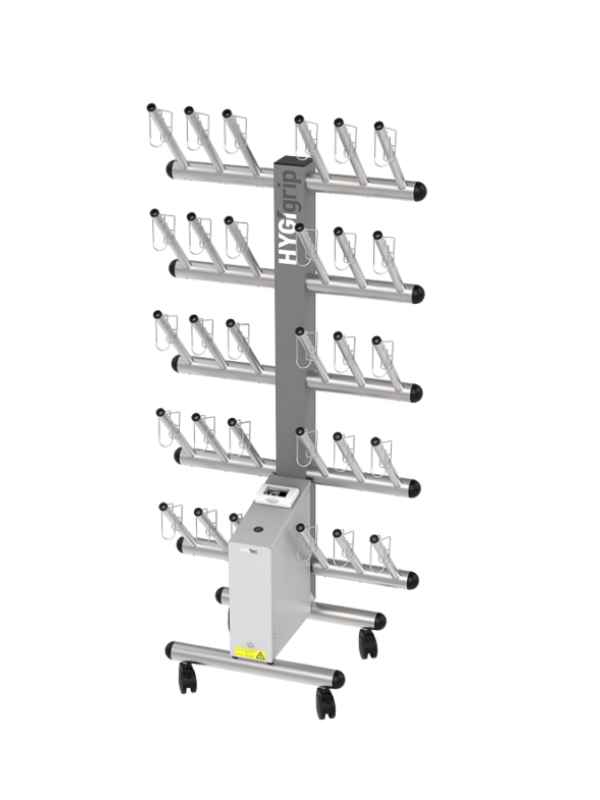
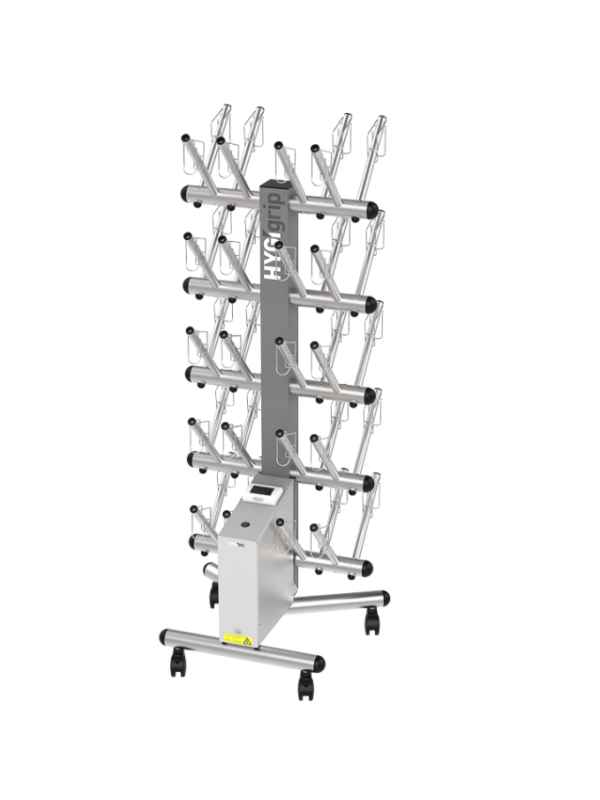
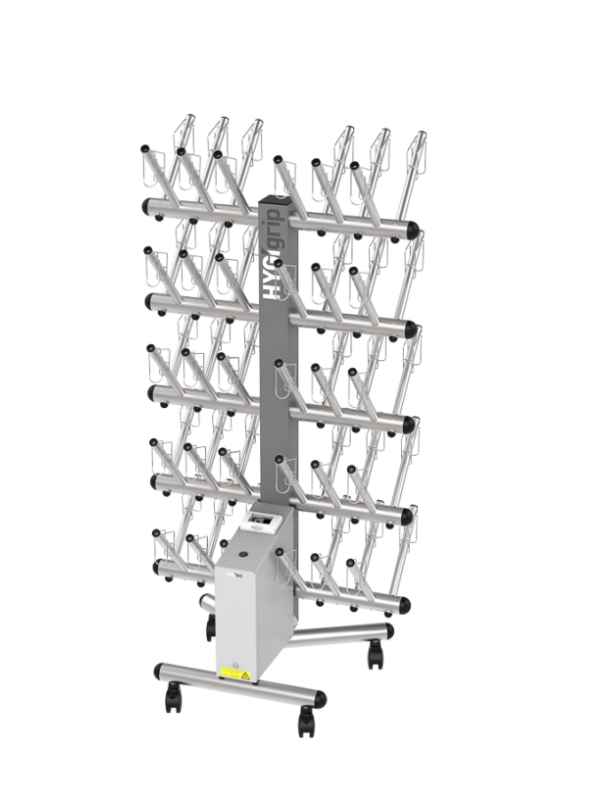
The HYGIgrip range is available in configurations of 10, 15, 20 or 30 pairs, depending on the model, with single-sided or double-sided versions. Therefore, the right choice depends on the number of members, how often training takes place, and the volume of gloves to be treated each day.
- Small facility: a smaller capacity may be enough.
- Club with several consecutive classes or a large number of gloves available: a larger capacity makes it easier to rotate equipment.
JVD supports professionals in choosing the configuration best suited to their needs.
Interested in our products?
Whether you need product information or expert advice, don’t hesitate to get in touch for a video or phone consultation.
7. FAQ
Drying is easier when air circulates directly inside the glove. The HYGIgrip delivers heated air through perforated sleeves specially designed for boxing gloves.
Bad odors are encouraged by moisture and the growth of micro-organisms inside the gloves. To limit them lastingly, it is essential to combine effective drying with a disinfecting treatment. JVD’s HYGIgrip combines both actions through the circulation of hot air at 45 °C and an ozone treatment, with no added chemicals or synthetic fragrance.
In a boxing club, gloves made available to several users need regular maintenance to limit moisture, bad odors and the proliferation of micro-organisms. JVD’s HYGIgrip simplifies this upkeep by combining hot-air drying and interior sanitization in a single cycle.
The recommended cycle lasts approximately two hours for drying and treatment. The device can be used in manual mode or programmed in automatic mode.
No. The air is heated to a controlled temperature set to ensure the gloves are not degraded.
Depending on the model, the HYGIgrip can hold 10, 15, 20 or 30 pairs of gloves, in single-sided or double-sided versions.