In a food processing plant, hygiene does not stop at floors and conveyors. The tools used for cleaning, especially brushes, must themselves be disinfected according to a strict protocol. In the field, however, this link is the one most often neglected. And the consequences go far beyond a simple failure to follow protocol.
Industrial cleaning brush disinfection: field challenges
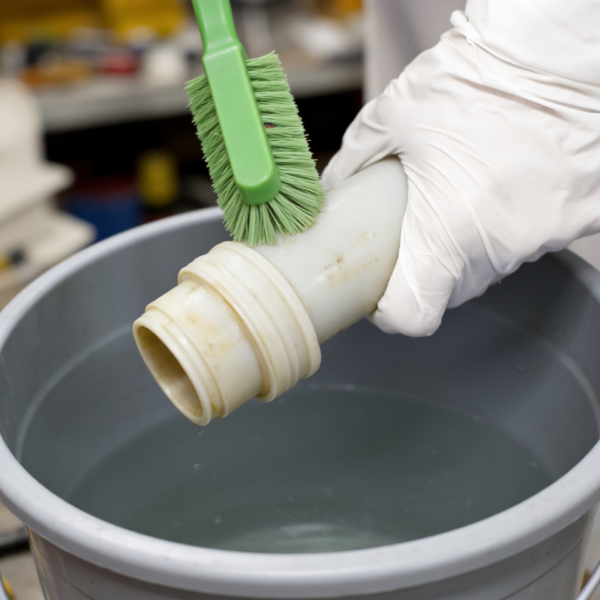
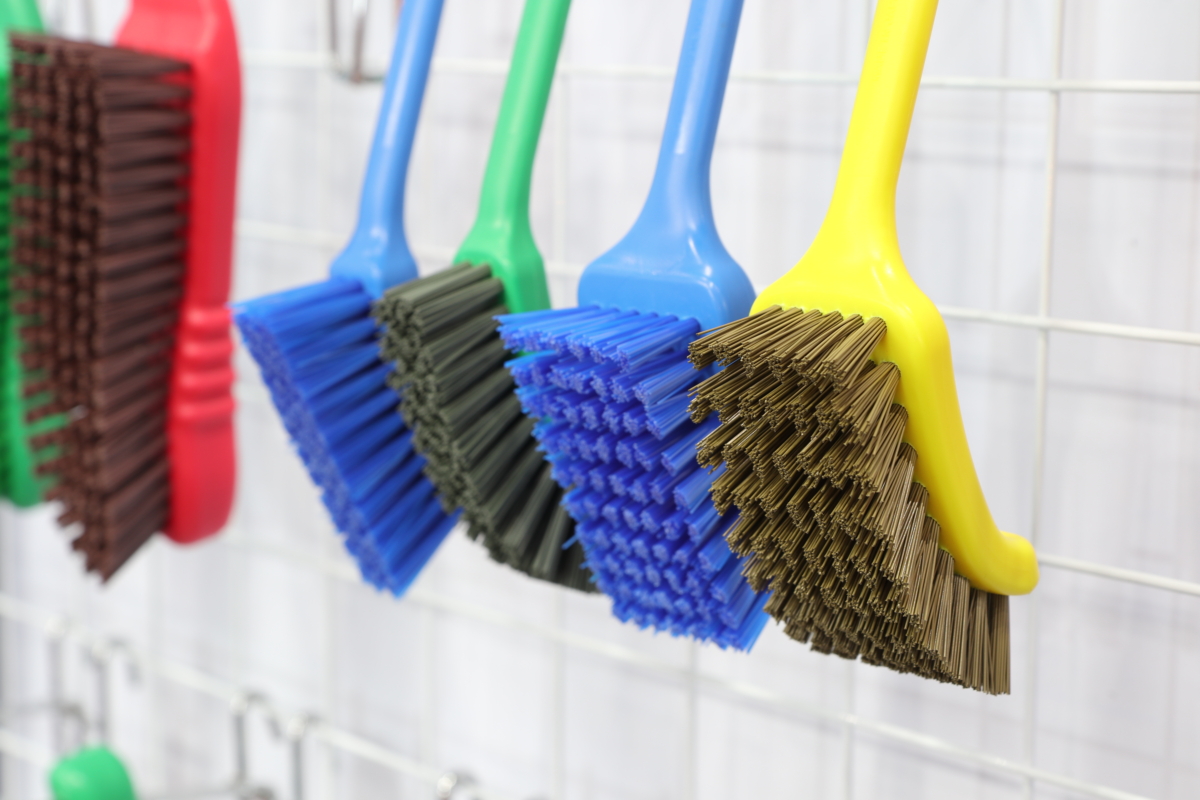
An industrial cleaning brush is a tool made of bristles (nylon, polypropylene, or sometimes stainless steel) attached to a rigid base, used to mechanically remove dirt from floors, conveyors, tanks, or production equipment.
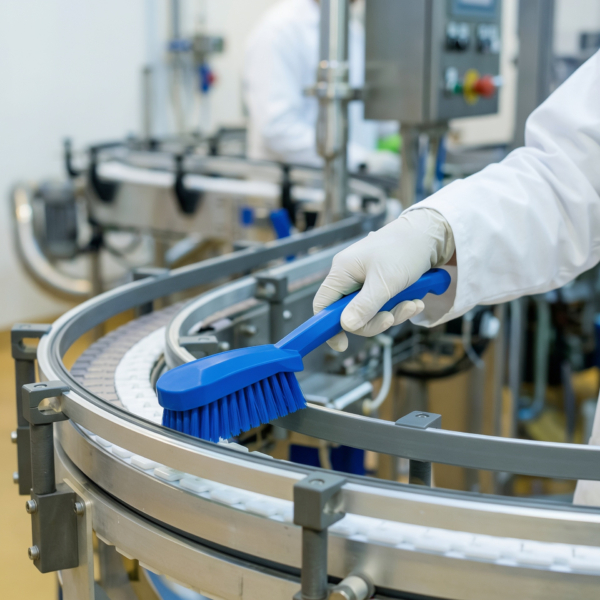
Field reality on a food production line
End of shift on a food processing line. An operator has just brushed a conveyor and then dips their brush into the disinfectant tank provided for this purpose. The product data sheet indicates an action time of several minutes before the brush is considered disinfected. However, the next line needs it immediately, and no one is really timing the tank.
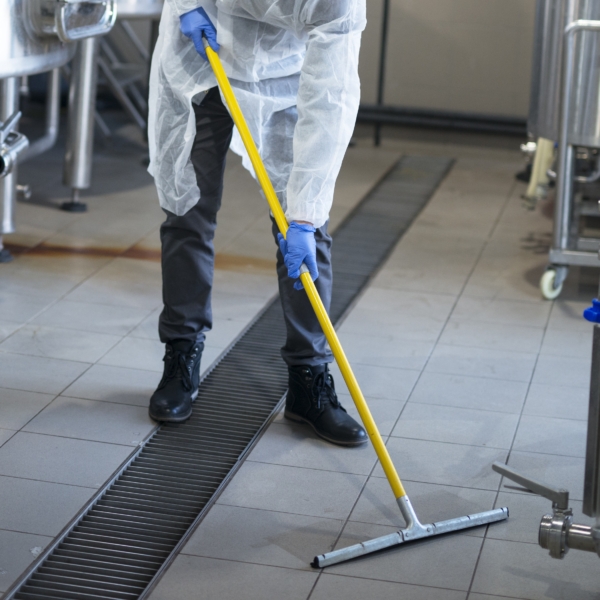
This moment, seemingly trivial, is one of the most closely monitored in food hygiene: cleaning tools like brushes and squeegees rank second among the most frequently checked points for the presence of Listeria, right after floor drains.
Biofilm, the invisible enemy of poorly disinfected brushes
Effective disinfection relies on 4 parameters, illustrated by the TACT method: Temperature, mechanical Action, Concentration, and contact Time. It is this last one, the product’s action time, that is most often cut short under the pressure of the production pace. The problem is exacerbated by biofilms: these communities of microorganisms adhere strongly to surfaces and resist standard chemical disinfection, making them a frequent source of cross-contamination.
Bleach, up to 1000 ppm, has little effect on a Listeria biofilm, and brushing alone is not enough to eliminate it. In other words, neither more product nor more scrubbing compensates for insufficient contact time.
The true cost of failing to respect contact time
A poorly disinfected brush returns to production with an active microbial load. In 2024, more than 2,000 food recalls were recorded in France, an increase of 6% over one year, with Listeria, Salmonella, and E. coli remaining among the leading causes. Beyond the health risk, there is also an operational risk: a single suspected batch can lead to a line shutdown and an enhanced audit.
Novven 3S takes back control of the hygiene protocol
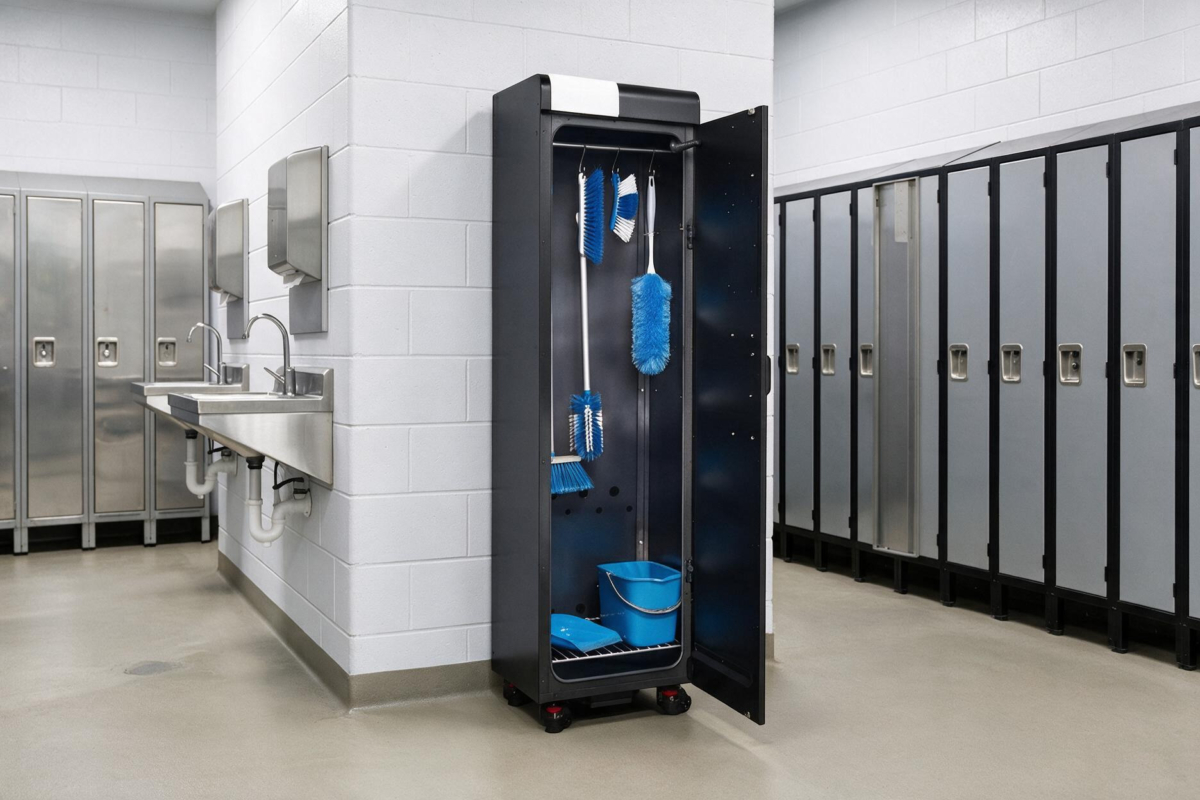
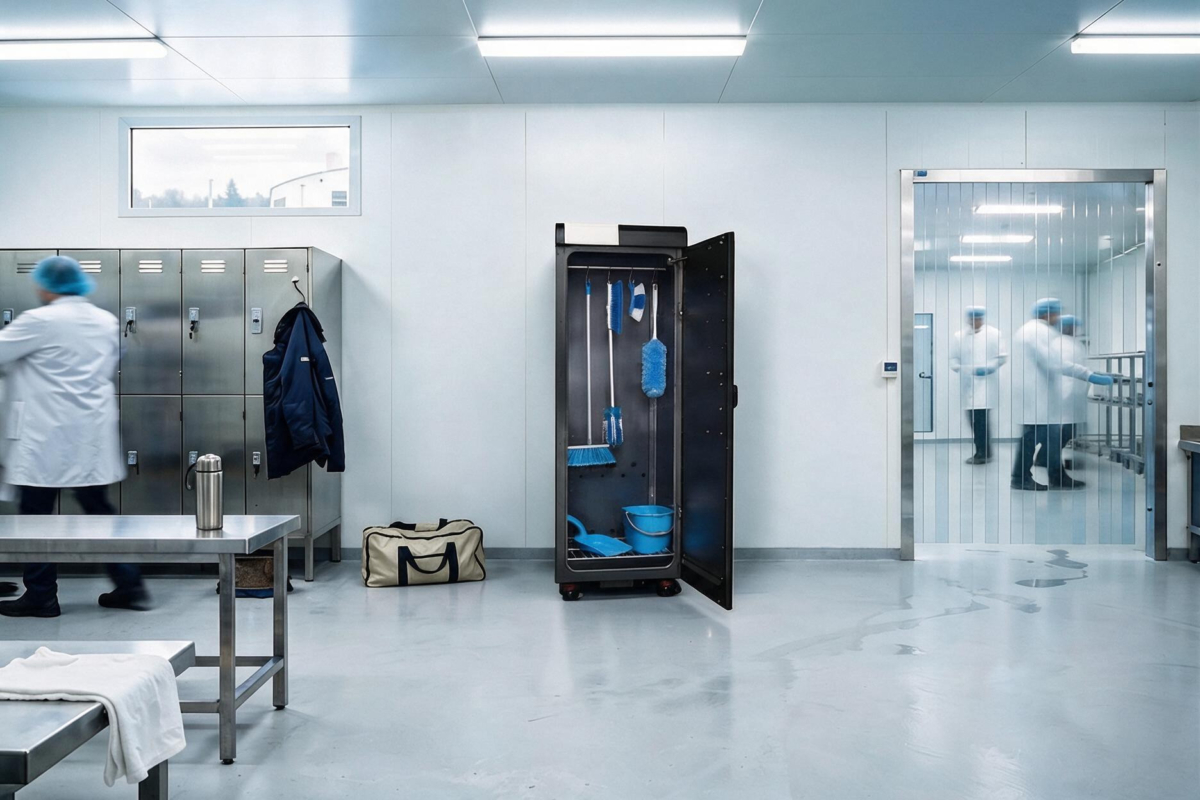
The Novven 3S cabinet – Equipment Pack houses and disinfects brushes, squeegees, buckets, and small equipment via its Smart Air Care technology, without the use of water or chemicals. The cycle is automated and tracked, which removes dependence on human vigilance for contact time and provides a record that can be used during a HACCP audit. In the field, as soon as the brush is free of residue, the cabinet alone is sufficient to ensure disinfection, without the need for an additional chemical tank.
| Criteria | Manual soaking in a chemical tank | Novven 3S Cabinet |
| Compliance with contact time | Depends on the operator and the production pace | Automated cycle, fixed duration |
| Traceability | Rarely documented in real-time | Cycle history recorded |
| Water / chemicals | Required | No chemicals required for disinfection; a simple rinse with clean water beforehand is still recommended if the brush has visible residue |
| Cross-contamination between shared tanks | Present risk | Reduced, compact format scalable by zone |
Frequently Asked Questions
The Novven 3S is a device that dries, deodorizes, and disinfects cleaning tools through an automated cycle, without manual chemical soaking.
A community of microorganisms that strongly adheres to a surface and resists standard chemical disinfection.
The recommended contact time can be up to 20 minutes depending on the product used, a duration that must be strictly observed to be effective.
Not necessarily: concentrations of up to 1000 ppm have proven to be ineffective against a Listeria biofilm in the study cited above.
Both provide the same functions; the Novven 3S is a compact version, suitable for sites with less space or those wishing to multiply the number of treatment points.
At regular intervals after use, then stored on suitable racks, in accordance with the facility’s cleaning and disinfection plan.
Are you interested
in our products?
Whether you are looking for product information or expert advice,
please do not hesitate to contact us for a video call or a phone conversation.