Electric hand dryers have become a standard feature in professional washrooms thanks to their speed, controlled operating costs, and hygiene benefits. But one criterion can strongly affect how well they are accepted in everyday use: noise level.
In schools, nurseries, healthcare facilities, or office buildings, a hand dryer perceived as too loud can reduce user comfort, generate complaints, and even discourage use. On the other hand, a well-chosen model helps create a more pleasant experience without compromising performance.
In this article, we explain what the noise level of an electric hand dryer really means, how to compare decibels between models, and which type of unit is best suited to your environment.
At a glance: how to assess the noise of an electric hand dryer
The noise level of an electric hand dryer is generally expressed in dB(A), based on measurements taken under specific conditions, often 1 metre from the unit. To compare two models properly, it is essential to check that the test conditions are identical: same distance, same position, and ideally the same usage logic.
In practice, the perceived noise also depends on the installation environment. A unit may seem louder in a small tiled washroom than in a space with better acoustic treatment. To make the right choice, you need to look at the declared noise level, the room configuration, and the expected level of comfort together.
Electric hand dryer noise level: what are we really talking about?
When discussing the noise of an electric hand dryer, two different realities are often mixed together: the measured sound level and the noise actually perceived by users.
The measured sound level is a technical value expressed in decibels. It is useful for comparing units, provided that the measurements were taken under the same conditions. Perceived noise, however, depends on several factors: room reverberation, proximity to the unit, sound frequency, and even the sensation created by air velocity.
In other words, the same hand dryer may be considered perfectly acceptable in one environment and too aggressive in another. That is why the noise level should never be considered on its own: it must always be interpreted in relation to the installation context.
dB or dB(A): how to read a product data sheet
On a product sheet, the noise level of a hand dryer is often given in dB or dB(A), together with the test condition, for example at 1 metre in front of the unit.
In practice, what matters most is not the symbol itself, but the consistency of the measurement method. To compare two models correctly, you need to check that the distance, position, and test conditions are similar. An isolated figure has little value if it is not supported by clear context.
The right approach is therefore to compare sound levels measured under the same conditions, and first of all at the same distance. That is what makes the comparison relevant for a real project.
Key takeaway: compare values measured at 1 metre, not just a number shown without context.
How to compare two hand dryers without making mistakes
To compare the noise of two electric hand dryers correctly, several factors need to be checked. The first is the measurement distance: a sound level declared at 1 metre cannot be directly compared with one measured at 2 metres.
You should also look at the measurement position, since the sound can vary depending on whether you are standing in front of the unit, to the side, or in another specific configuration. The type of room also plays an important role: in a highly mineral washroom with tiles and a low ceiling, sound reflects more and feels more present.
Finally, air speed remains a decisive factor. The faster and more powerful the airflow, the higher the sound level tends to be. This is often the trade-off for a very short drying time. The right choice is therefore to find the best balance between performance, acoustic comfort, and actual usage.
Where does the noise of an electric hand dryer come from?
The noise of an electric hand dryer does not come from one single source. It is the result of a combination of technical factors and installation conditions.
The motor plays a central role, as does the speed of the airflow. The more the air is accelerated, the more noise can be generated. The design of the air outlet, nozzle direction, and turbulence also influence how the sound is perceived.
Installation quality also matters. Unstable fixings, an unsuitable support, or poorly absorbed vibrations can reduce user comfort. Lastly, room acoustics remain a key factor: in a reverberant space, a unit will often seem louder than it would in a better-dampened environment.
Practical tip: a hand dryer installed properly on a suitable surface can feel far more comfortable than the exact same model installed poorly.
Which hand dryer should you choose for your environment?
There is no single ideal noise level in absolute terms. The right choice depends on the type of location, traffic levels, expected comfort, and in some cases other criteria such as durability, hygiene, or odour management.
In offices or healthcare facilities, acoustic comfort may be a priority. In transport hubs, sports centres, or industrial environments, drying speed and resistance to intensive use will often carry more weight.
Here are our recommendations by sector to help you identify the most suitable model for your needs.
Nurseries, schools, early childhood facilities
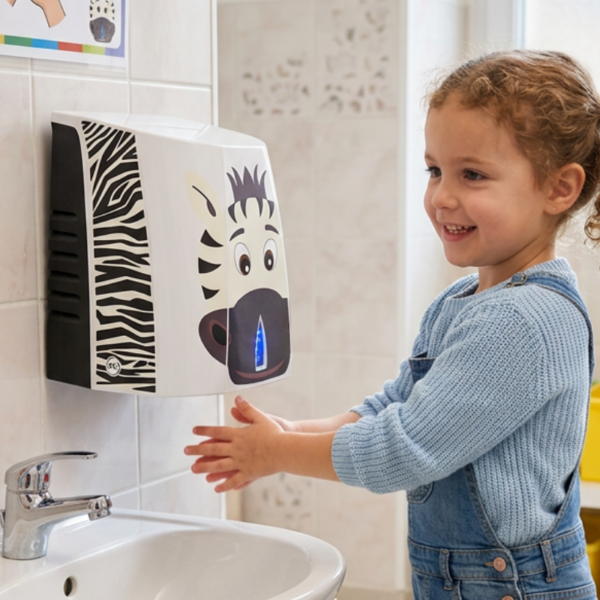
In facilities welcoming children, choosing a hand dryer is not only about noise level. You also need to consider installation height, ease of use, and the unit’s ability to support the learning of good hygiene habits.
Our recommendation:
Sup’Air Kids if you are looking for a solution suited to regular use, easy to integrate, and designed for children.
Exp’Air Kids if the site handles heavier traffic and needs a unit better suited to intensive use while maintaining an educational approach.
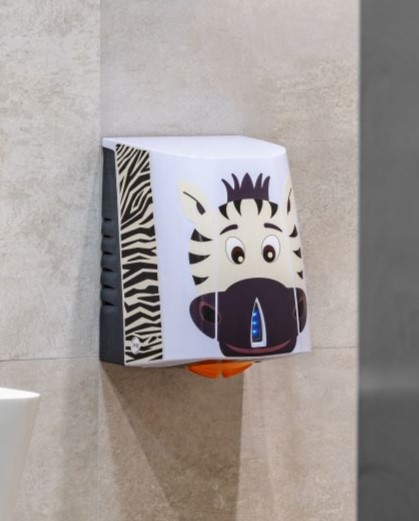
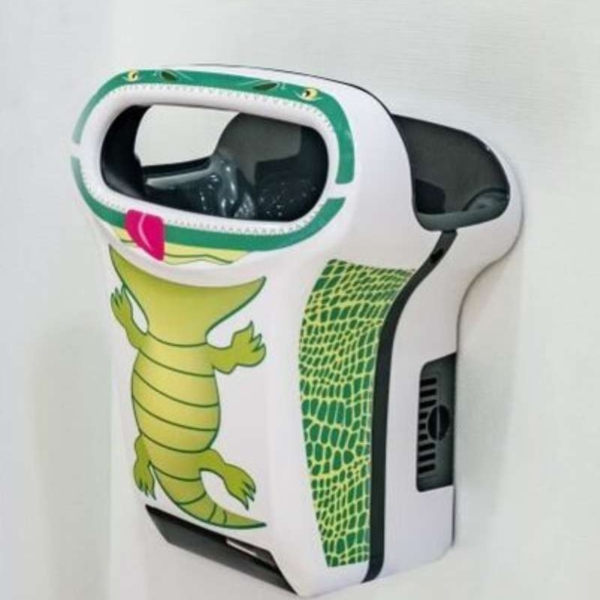
Healthcare facilities
In healthcare environments, the hand dryer must combine several requirements: hygiene, user comfort, durability, and service continuity. Noise level matters particularly in sensitive areas, where calm also contributes to the overall quality of the environment.
Our recommendation:
Stell’Air if your priority is acoustic comfort, with a robust unit particularly well suited to demanding environments.
Sup’Air Fresh if you are looking for fast drying, good day-to-day acceptance, and an added benefit in odour neutralisation.
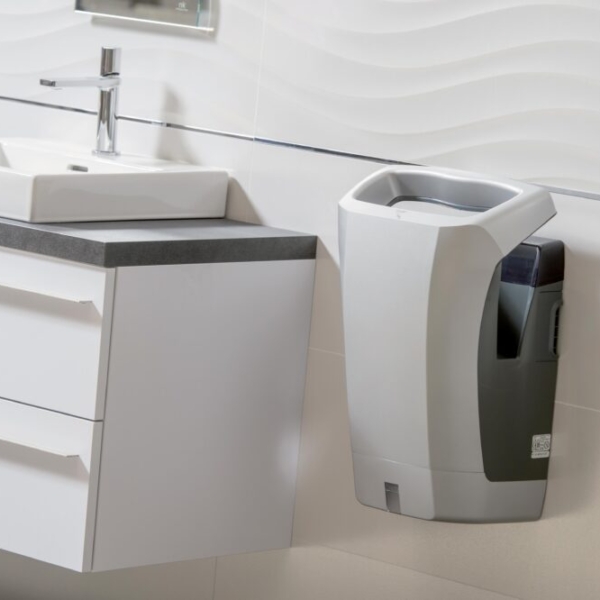
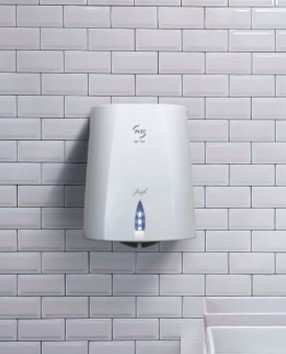
Offices and commercial buildings
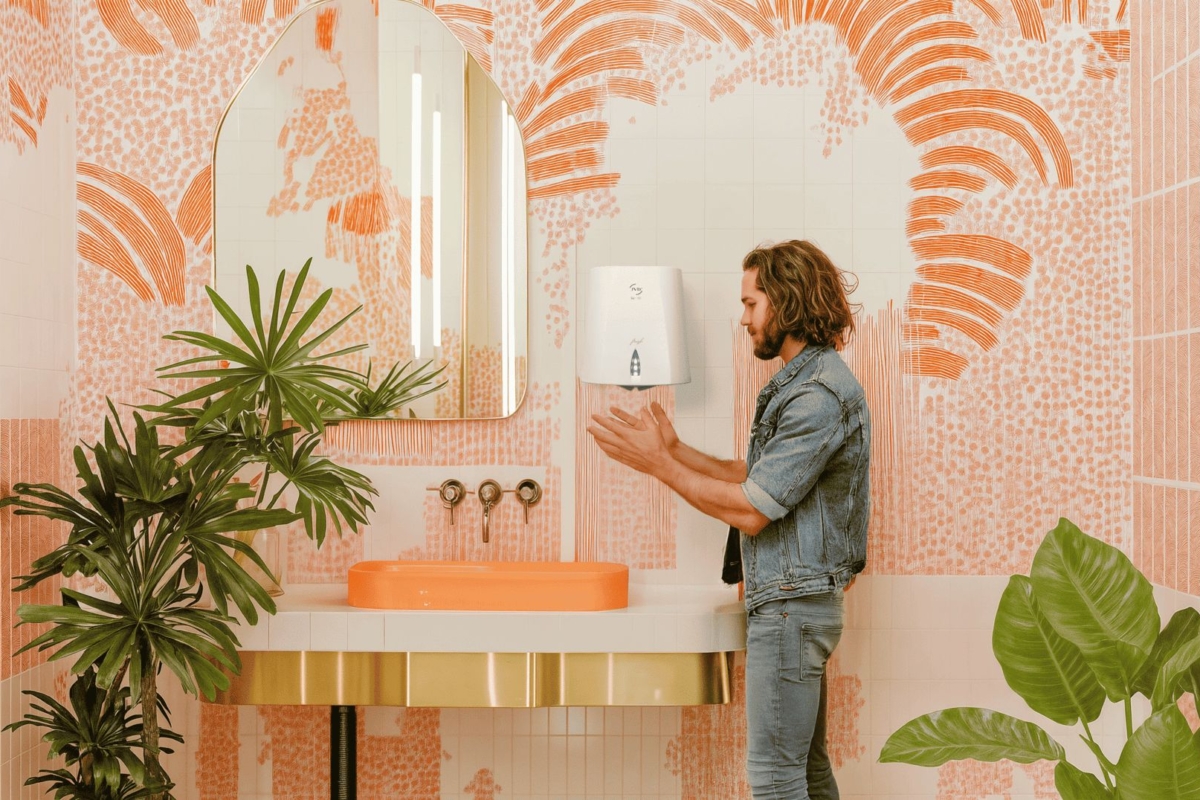
In office buildings, the hand dryer is used every day by employees and visitors. A poorly accepted unit can quickly become a source of irritation, especially when installed close to quiet areas.
Our recommendation:
Sup’Air Fresh to combine fast drying and odour neutralisation.
Zephyr if your priority is lower noise and a more discreet user experience.
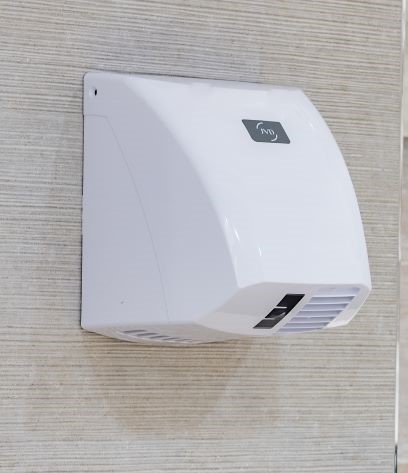
Industry and technical sites
In industrial environments, washrooms and changing areas must withstand heavy use, sometimes in more demanding conditions. Durability, ease of maintenance, and long-term reliability are often decisive criteria.
Our recommendation:
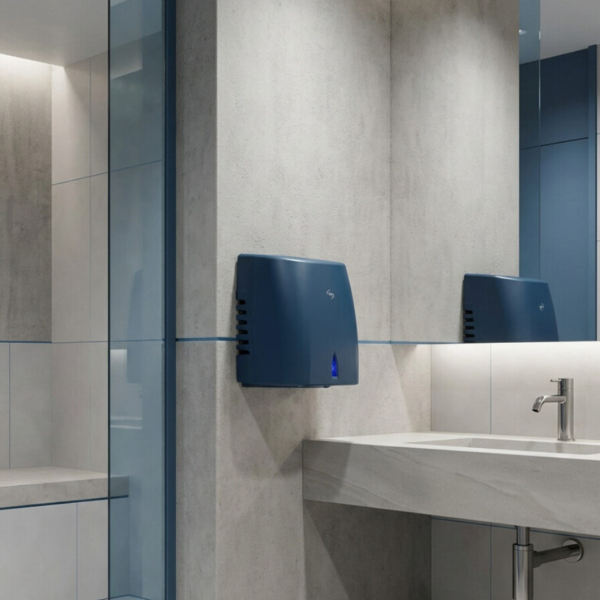
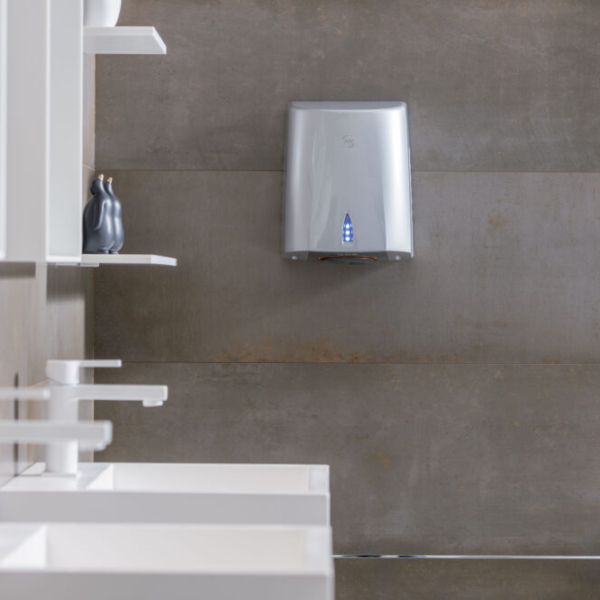
Copt’Air Inox if you need a highly resistant unit designed for intensive use and technical environments.
Copt’Air S Heated Inox if the premises are poorly heated and user comfort must be maintained despite colder conditions.
Sports and leisure facilities
In sports and leisure venues, traffic can be very high and vary significantly depending on the time of day. Units must be fast, reliable, and capable of adapting to environments that are sometimes humid or very busy.
Our recommendation:
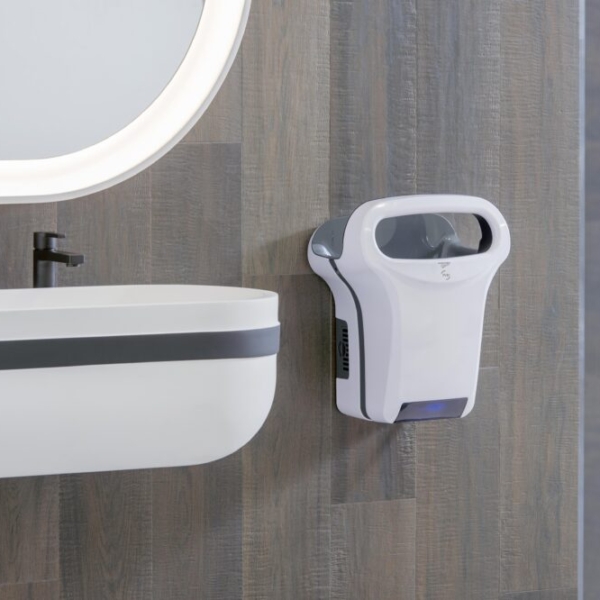
Exp’Air if you need a robust and fast model, well suited to high-demand sites such as swimming pools, gyms, or aquatic centres.
Stell’Air if you want to place more emphasis on acoustic comfort and a more premium experience in reception or high-end areas.
Foodservice
In restaurants, hotel-restaurants, and event venues, washrooms are fully part of the experience perceived by customers. The hand dryer must therefore be efficient, pleasant to use, and able to handle peak traffic without lowering the overall experience.
Our recommendation:
Sup’Air Fresh if you want to combine fast drying, a polished image, and odour neutralisation in washrooms located close to dining areas.
Exp’Air if you need a more field-oriented model capable of handling heavy traffic in demanding environments.
Transport hubs
In railway stations, airports, motorway service areas, or petrol stations, the priority is to provide reliable service despite very high traffic. Above all, the hand dryer must be durable, fast, and able to remain operational over time.
Our recommendation:
Exp’Air if you are looking for a good balance between airflow, drying speed, and resistance to intensive use.
Copt’Air Inox if the environment requires maximum resistance and materials particularly suited to harsh conditions.
Summary table
| Sector | Model | Noise level | Drying time | Main advantage | Recommended use |
|---|---|---|---|---|---|
| Nurseries, schools, early childhood | Sup’Air Kids | 75 dB | 10–15 s | Child-friendly, visual guidance | Regular use |
| Exp’Air Kids | 75 dB | 10–15 s | Designed for heavier traffic | Intensive use | |
| Healthcare facilities | Stell’Air | 73 dB | 10–15 s | Acoustic comfort, IK10 | Sensitive areas |
| Sup’Air Fresh | 75 dB | 10–15 s | Odour control + fast drying | High-traffic areas | |
| Offices & commercial buildings | Sup’Air Fresh | 75 dB | 10–15 s | Odour control + everyday comfort | Shared washrooms |
| Zephyr | 69 dB | 20–30 s | Quietest model, IK10 | Near open-plan offices | |
| Industry & technical sites | Copt’Air Inox | 80 dB | 10–15 s | Stainless steel cover, high durability | Changing rooms, workshops |
| Copt’Air S Heated Inox | 80 dB | 10–15 s | Smart heating, stainless steel IK10 | Poorly heated premises | |
| Sports & leisure | Exp’Air | 75 dB | 10–15 s | Robust and fast | Heavy traffic |
| Stell’Air | 73 dB | 10–15 s | Premium acoustic comfort | Reception areas | |
| Foodservice | Sup’Air Fresh | 75 dB | 10–15 s | Odour control + polished image | Customer washrooms |
| Exp’Air | 75 dB | 10–15 s | Designed for heavy traffic | Intensive use | |
| Transport hubs | Exp’Air | 75 dB | 10–15 s | Good balance of airflow and durability | High turnover |
| Copt’Air Inox | 80 dB | 10–15 s | Maximum resistance, stainless steel | Harsh conditions |
The sound levels shown are measured at 1 metre, according to manufacturer test conditions. Perceived noise may vary depending on room acoustics, reverberation and installation.
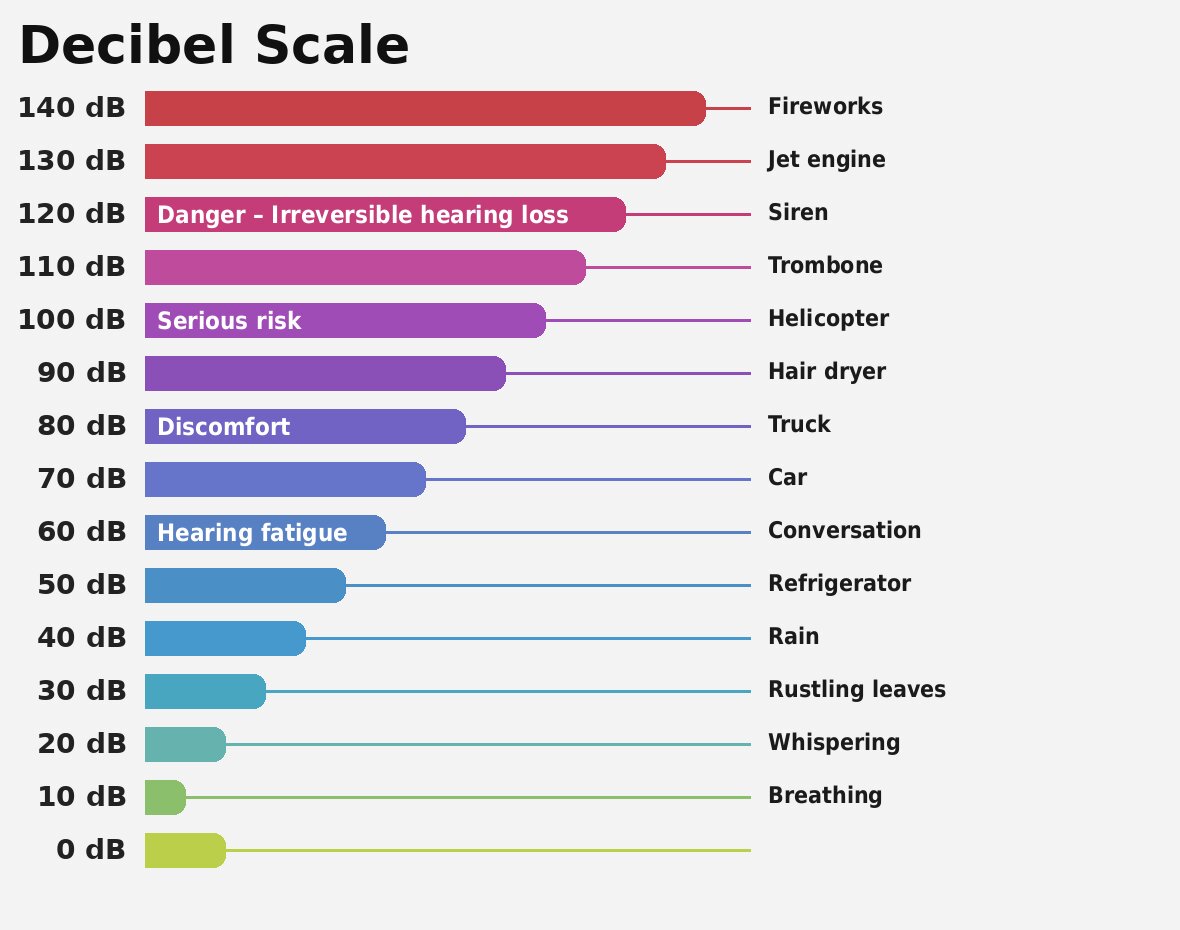
Yes. Decibels follow a logarithmic scale: an increase of 3 dB corresponds to a doubling of sound energy. A 6 dB difference therefore represents about 4 times more sound energy. In other words, going from 69 dB to 75 dB is not a “small difference” that should be interpreted linearly.
Because the sound level decreases as you move away from the source. In a free field, doubling the distance from the source reduces the sound pressure level by about 6 dB. A level stated at 2 m is therefore not directly comparable to a level stated at 1 m.
Because the room itself changes the sound. In a space with hard surfaces such as tiles, walls and ceilings, the sound is reflected back: these reflections make it last longer and increase the sensation of noise. This is the principle of reverberation, which depends directly on the materials and the geometry of the space.
Yes, to get an order of magnitude or compare two on-site installations. NIOSH provides a measurement app, and its work shows that with a calibrated external microphone, this type of tool can approach the performance of a reference sound level meter. Without a calibrated microphone, however, reliability varies depending on the phone and the app used.
The best-known reference points mainly concern long-term exposure. For example, INRS indicates 80 dB(A) as a harmful threshold for prolonged exposure and points out that 8 hours at 80 dB(A) may be equivalent to 1 hour at 89 dB(A) in terms of risk. For a user drying their hands for a few seconds, the main issue is therefore usually acoustic comfort and acceptance rather than immediate hearing risk.
Not exactly. dB(A) applies a weighting designed to better reflect how the human ear perceives frequencies. That is why equipment noise levels are often expressed in dB(A) rather than in raw dB.
Interested in our products?
Whether you need product information or expert advice, feel free to contact us for a discussion by video call or phone.