In industrial environments, protective gloves are among the most frequently worn PPE (Personal Protective Equipment) on a daily basis. However, their hygiene is often neglected. Poorly dried, damp, or bacteria-infested gloves quickly become uncomfortable, or even hazardous to the health of operators. The professional glove dryer therefore stands out as a solution that is simultaneously hygienic, economical, and sustainable.
Table of contents:
- What types of gloves are used in industry?
- Why must industrial gloves be dried properly?
- What are the risks of poor hyigene of work gloves?
- How does the HYGIgrip glove dryer by JVD address these issues?
- Which glove dryer should you choose based on your team size?
What types of gloves are used in industry?
Industry covers a wide variety of sectors (chemicals, food processing, construction, metallurgy, logistics), and each environment imposes its own protection requirements. This is especially true given that hand injuries are the leading cause of all accidents treated in emergency rooms in France, with more than 1.4 million people affected by hand and wrist trauma each year, according to the European Hand Institute. Several major families of industrial gloves can be distinguished:
| Type of glove | Main material | Typical use |
| Cut-resistant gloves | HPPE fibers, Kevlar, steel | Glass industry, metallurgy, cutting |
| Chemical-resistant gloves | Nitrile, neoprene, latex | Chemical industry, pharmaceutical industry |
| Thermal / cold-weather gloves | Insulating foam, technical fibers | Cold chain logistics, food processing |
| Anti-vibration gloves | Gel foam, reinforced leather | Construction, forestry |
| Long-cuff gloves | Leather, PVC, nitrile | Welding, foundry, dirty work |
| Light handling gloves | Nylon, coated polyester | Logistics, assembly |
Each of these gloves has its own maintenance constraints. Nitrile or neoprene gloves are particularly sensitive to internal humidity: after a day of use, perspiration accumulates and creates an ideal environment for bacterial proliferation.
Why must industrial gloves be dried correctly?
An industrial glove is worn for several hours at a time. The hand perspires, moisture accumulates inside, and if the glove is simply placed in a locker or changing room between uses, it does not dry or dries too slowly.
Result: microorganisms (bacteria, fungi, mold) proliferate within a few hours.
Proper drying allows for:
- Eliminating internal moisture to prevent the development of pathogens;
- Preserving the integrity of materials (nitrile, leather, technical fibers) and thus extending the lifespan of the glove;
- Ensuring operator comfort the next time the gloves are put on;
- Reducing unpleasant odors that may discourage the regular use of PPE.
A well-maintained glove also means an operator who is willing to wear it without resistance, which is far from anecdotal from a prevention standpoint.
What are the risks of poor hygiene of work gloves?
In France in 2022, more than 600,000 workplace accidents were recorded and 44,000 cases of occupational diseases were recognized, according to the Health Insurance – Occupational Risks branch. Among the aggravating factors identified, explicit mention is made of failure to follow safety instructions or lack of PPE, as well as the use of faulty PPE. However, poorly maintained or defective PPE can be more dangerous than having no protection at all, as it provides a false sense of security.
A damp and poorly dried glove concretely exposes the worker to several risks:
Dermatological risks: Prolonged humidity against the skin promotes contact dermatitis, mycoses, and other skin conditions. In the chemical or agri-food sectors, these pathologies can lead to sick leave.
Premature degradation of PPE: Materials such as leather or elastomers deform or lose their protective properties if they remain damp for too long. The glove must then be replaced more frequently, which increases costs for the company.
Regulatory non-compliance: According to the Labor Code, the employer has the obligation to ensure the maintenance of the PPE they provide to their employees, as well as their repair or replacement if necessary. A poorly maintained glove can be considered non-compliant PPE during an audit.
Infectious risk: In sensitive environments (agri-food, healthcare, pharmaceuticals), gloves colonized by bacteria can contaminate the products being handled.
How does JVD’s HYGIgrip glove dryer address these challenges?
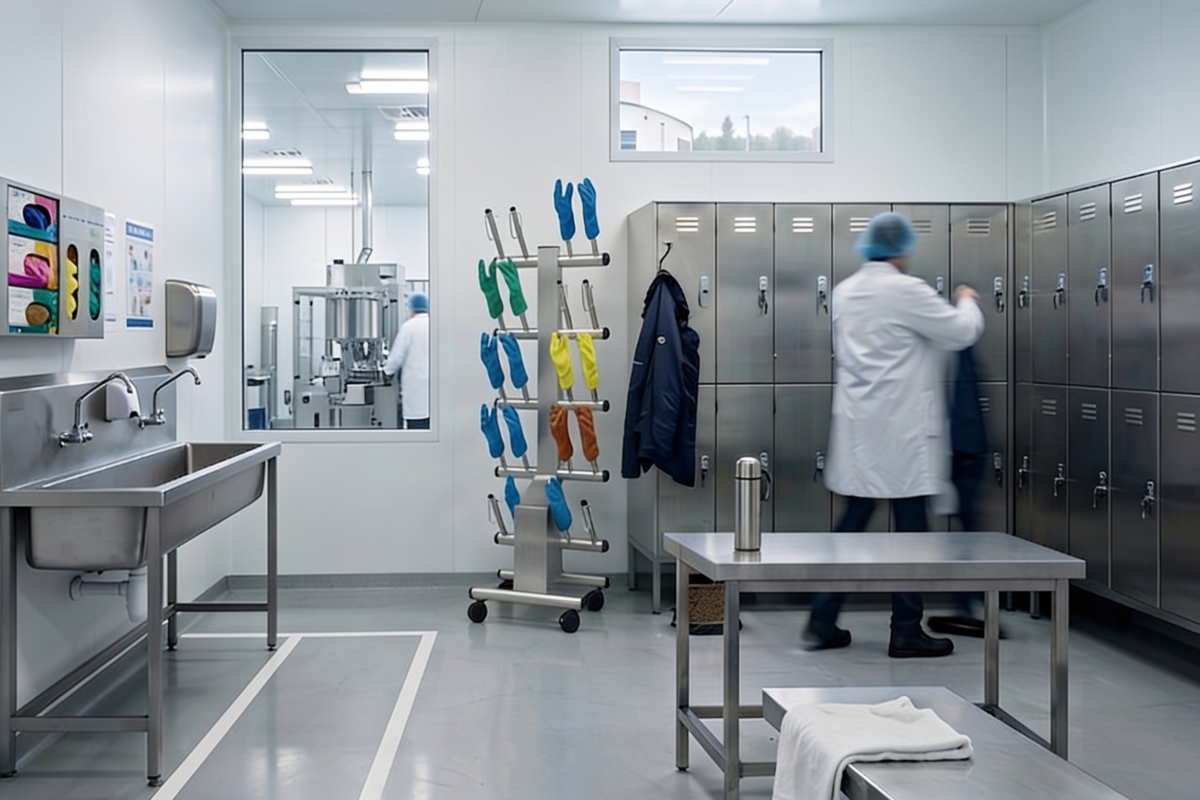
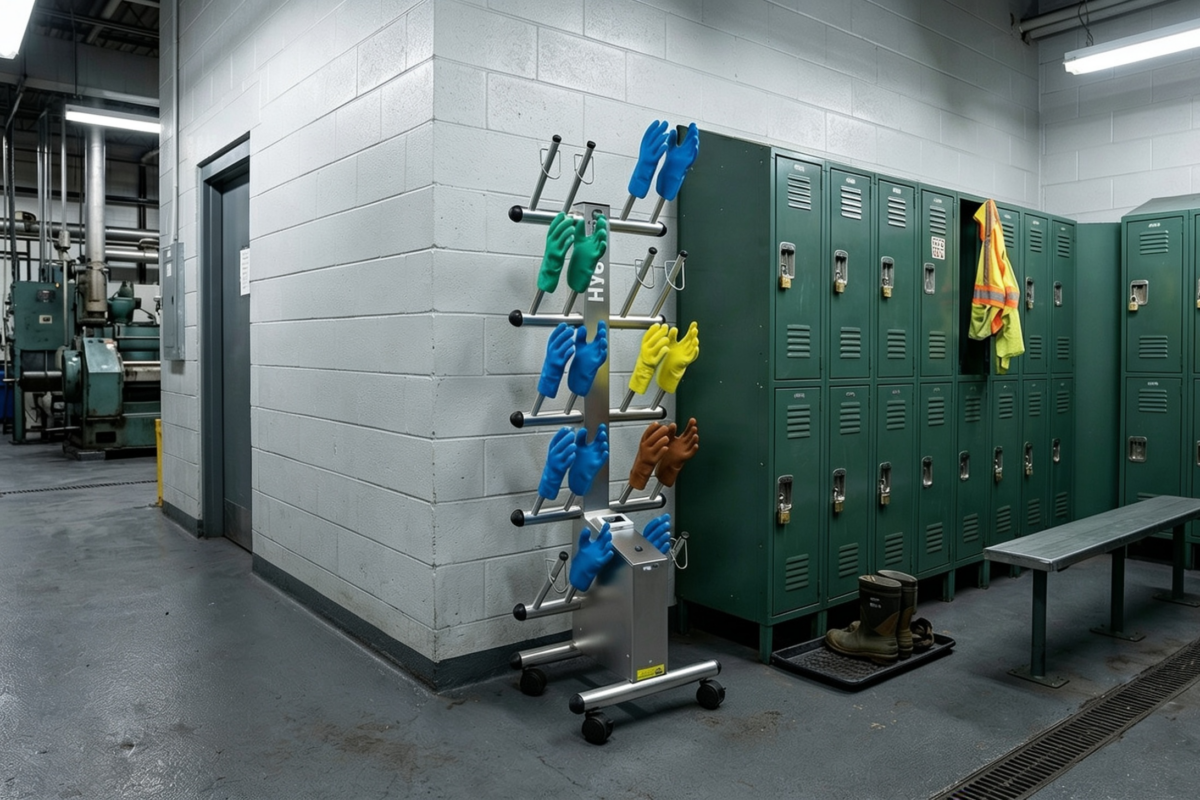
A professional glove dryer relies on the circulation of warm or forced air inside the glove, through sleeves onto which the gloves are placed. This process allows for drying from the inside out, unlike air-drying flat, which leaves moisture trapped in the core of the glove.
JVD has taken things a step further with the HYGIgrip range, a professional glove dryer from Hygitec by JVD, designed and manufactured in France, and built for the most demanding industrial environments. It combines drying and sanitization without the use of chemicals: the circulating hot air acts directly on bacteria, mold, and fungi without the need for additives or consumables.






Which HYGIgrip glove dryer should you choose based on your team size?
The HYGIgrip range is available in several capacities to adapt to the size of your teams and the constraints of your premises. Each model is available in a standard version (epoxy-coated steel) or 304L stainless steel, which is recommended for humid or food-processing environments, or areas subject to frequent cleaning.
| Model | Capacity | Configuration | Ideal for |
| HYGIgrip 5p. single | 5 pairs | single | Small teams, isolated workstations |
| HYGIgrip 10p. single | 10 pairs | single | Teams of 10 operators |
| HYGIgrip 15p. single | 15 pairs | single | Medium-sized workshops |
| HYGIgrip 20p. single | 20 pairs | single | Large workshops, collective locker rooms |
| HYGIgrip 20p. double | 20 pairs | double | Space-saving, compact areas |
| HYGIgrip 30p. double | 30 pairs | double | Large industrial sites, high-staff numbers |
Are you interested
in our products?
Whether you need product information or expert advice,
do not hesitate to contact us for a video call or a phone conversation.
Ideally after every use. A glove worn for an entire day accumulates enough moisture and bacteria to require a session in the glove dryer that same evening, before the next shift.
No. Devices like the JVD HYGIgrip operate on a standard 230V power supply and are designed to be energy-efficient. The energy cost is largely offset by the reduction in purchases of new gloves.
Yes, provided you choose a suitable device. The HYGIgrip accepts all formats: light gloves, cold-weather gloves, and long-cuff gloves. The sleeves adapt to different shapes and sizes.
Yes, in the case of the HYGIgrip. The forced hot air eliminates bacteria, fungi, and mold without any chemicals or consumables, an effectiveness certified by a COFRAC-accredited laboratory.
Yes. The Labor Code requires the employer to ensure the maintenance, repair, or replacement of PPE provided to employees. Poorly maintained gloves may be considered non-compliant during an HSE audit.